




 TIME:2026-09-18 16:43


The Xiasha Beach project in Fuzhou Binhai New City innovatively adopted key technologies such as “construction of multi-peak and multi-layer dunes in high-wind areas”. By reshaping the complete dune–beach–shelterbelt landform system, removing rigid seawalls, restoring natural shoreline morphology, and revitalising historical cultural tourism facilities, the project achieved a transformation from “grey protection” to “green resilience”. It significantly enhanced the coastal zone’s capacity to withstand extreme disasters such as storm surges, built a resilient coast that integrates ecological disaster reduction with marine-friendly spaces, and pioneered a replicable and scalable path for ecological protection and sustainable development along the sandy coasts of southeast China (contributing to SDGs 11, 13, 14, and 15).
Background: Ecological Degradation of the Sandy Coastal Zone and the Ecological Practice of Resilience Reconfiguration
The Fuzhou Binhai New City enjoys exceptional ecological conditions. However, it is classified as a Grade I storm-surge hazard area – a typical high-risk marine disaster zone – facing severe damage to the integrity of its sandy coastal geomorphology and increasing coastal erosion. To effectively address these issues, the Binhai New City launched the Xiasha coastal dune–beach restoration and nourishment project in June 2021, aiming to protect, restore, and promote the sustainable use of wetland ecosystems.
Project description: From “eroded and fragmented” to “blue‑green symbiosis”
The Xiasha coastal dune–beach restoration and nourishment project was initiated in June 2021. Guided by the principles of coastal dynamic geomorphology, it restored dunes and stabilised sand-fixing vegetation to build a beach–dune ecological buffer zone. From sea to land, it formed a continuous and complete beach ecosystem consisting of beach, dune, and backshore vegetation, restoring the ecological functions of the shoreline, expanding the buffer space of the sandy coast, effectively improving shoreline stability and disaster-reduction capacity, and treating direct marine pollution sources. The project created an ecological beach adapted to the restored coastal environment and landscape characteristics of the Xiasha area, improved the ecological service functions of the beach, and enhanced the overall value of coastal zone natural resource assets.The restored coastal dune section is approximately 1.28 km long, with a restoration area of about 2.71 hectares and a sand replenishment volume of approximately 67,400 cubic metres. The backshore dune vegetation restoration section is about 1.28 km long, covering an area of approximately 2 hectares. At the same time, to consolidate the ecological restoration effect of the sandy beach and ensure the health and stability of the beach ecosystem in the restored Xiasha area, the project addressed direct marine outfalls as a key intervention. This included both internal and external source pollution control, raising discharge standards for direct marine pollutants, and safeguarding the integrity of coastal landscapes and beach ecosystems. The area of marine pollution treatment covers 0.73 hectares.
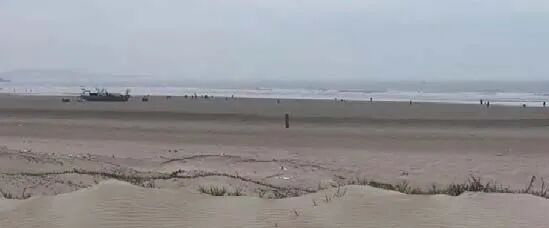
Xiasha Coast Before Restoration
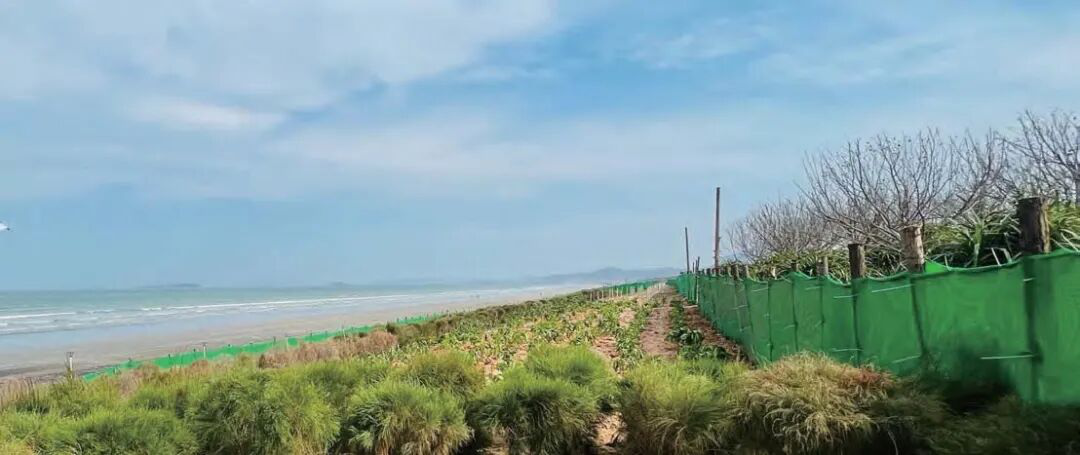
Xiasha Coast After Restoration
Sustainability impacts
Environmental impact: The project reshaped the complete “beach–dune–backshore vegetation” coastal geomorphic system, effectively treated direct marine pollution sources, improved coastal habitat conditions, and built a solid blue ecological barrier for Binhai New City.
Governance impact: It innovatively explored a new integrated land–sea management and systematic restoration model. By combining scientific sand nourishment, sand fixation, and pollution control, it established a cross-sectoral, cross-domain comprehensive coastal management and long-term operation and maintenance mechanism.
Economic impact: It successfully converted “ecological appearance” into “economic output”, activating new momentum for coastal tourism consumption. According to statistics, since its opening in May 2023, Xiasha Beach has received approximately 3.5 million visitors.
Social impact: It addressed the long-standing pain point of coastal erosion threatening residents’ livelihoods. Through people-centred restoration, it greatly enhanced public satisfaction and well-being in terms of coastal access. According to satisfaction surveys, public satisfaction with the Xiasha dune–beach restoration and nourishment project reached 99.4%.
Significance:
Sustainability: By establishing a comprehensive restoration effect assessment mechanism and a multi-department coordinated “wall-chart battle” system, the project ensured rapid implementation and long-term maintenance.
Replicability: As a typical case integrating economic, social, and environmental benefits, the project’s successful experience has already been applied to the restoration and nourishment of the surrounding Shawei Beach and the beach restoration project south of the airport.
Innovation: It built a comprehensive protection system dominated by Casuarina and mixed forests on the landward side, while creating an ecological dike composed of “beach–backshore vegetation–shelterbelt” on the seaward side, forming a resilient defence line for bidirectional disaster reduction from both sea and land.
Source: Global Alliance for Sustainable Development in Cities


OFFICIAL WECHAT
Email:
secretariat_21cmcc@163.com
Telephone:
+86-591-83532970
+86-591-83533101
Fax:
+86-591-83531520
Address:
Room 728, Building 3, Eastern Municipal Government Office Compound, 193 South Riverside West Avenue, Cangshan District, Fuzhou City, Fujian Province, China
Set As Default Home Page|Add To Favorites|CONTACT US
Copyright: © 21st-Century Maritime Cooperation Committee Public security record number:35010402351060 闽ICP备2020019451号
 Close
Close File:
File: